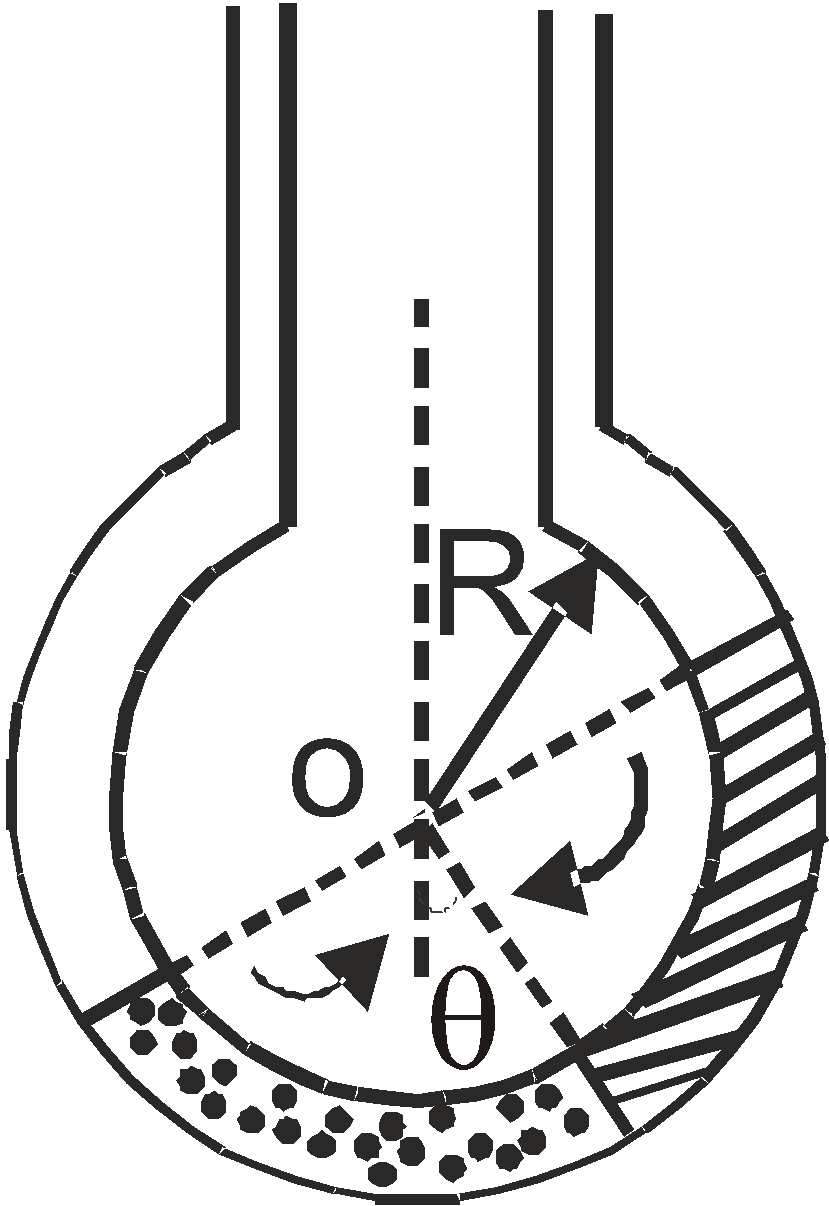
Two non–viscous, incompressible and immiscible liquids of densities ρ and 1.5 ρ are poured into the two limbs of a circular tube of radius R and small cross–section kept fixed in a vertical plane as shown in fig. Each liquid occupies one–fourth the circumference of the tube.
Text Solution
Verified by ExpertsCHECK THE SOLUTION.
tan – 1  , 2
, 2 
Sol. In equilibrium, pressure of same liquid at same level will be same.
Therefore, P 1 = P 2
or P + (1.5 ρ g h 1 ) = P + ( ρ g h 2 )
(P = pressure of gas in empty part of the tube)
∴ 1.5 h 1 = h 2
1.5 [ R cosθ– R sinθ] = ρ (R cosθ + R sinθ)
Or 3 cosθ– 3 sinθ= 2 cosθ + 2 sinθ
or 5 tanθ = 1
θ = tan – 1 
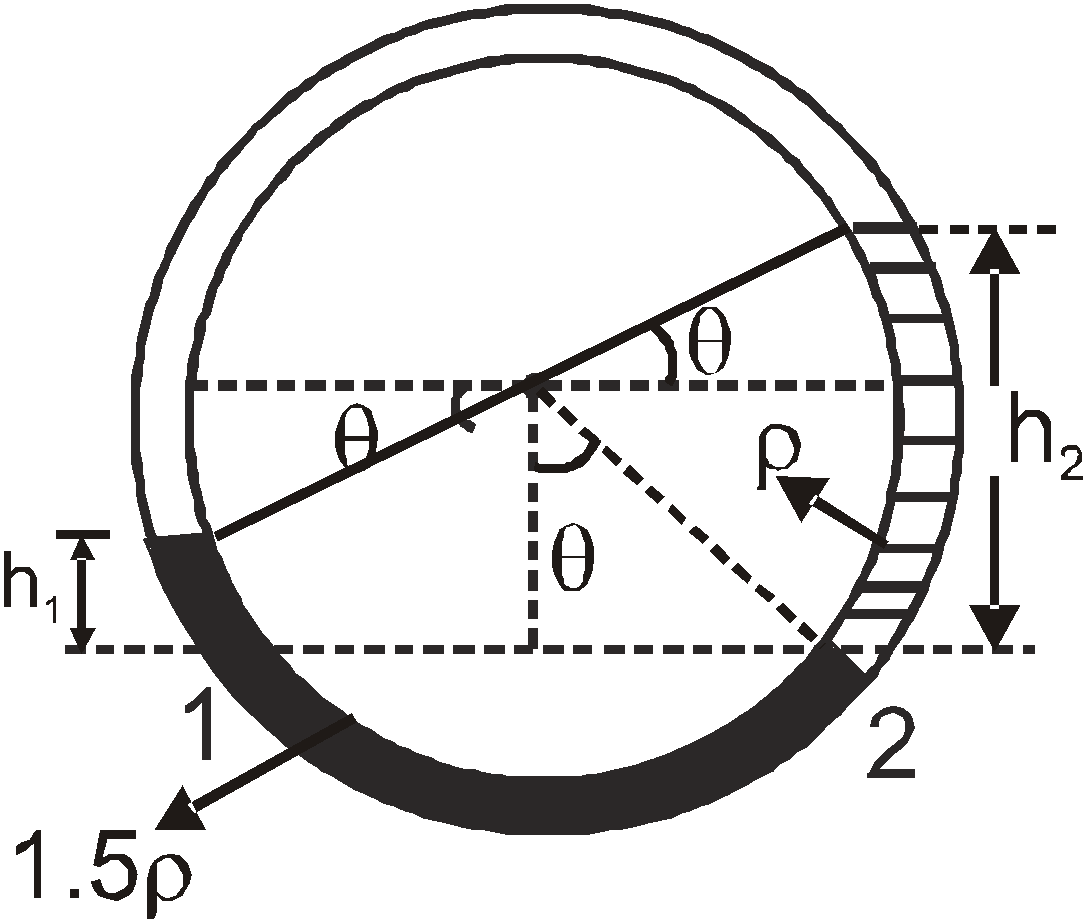
When liquids are slightly disturbed by an angle β. Net restoring pressure  P = 1.5 ρ gh + ρ gh This
pressure will be equal at all sections of the liquid. Therefore, net restoring torque on the whole liquid.
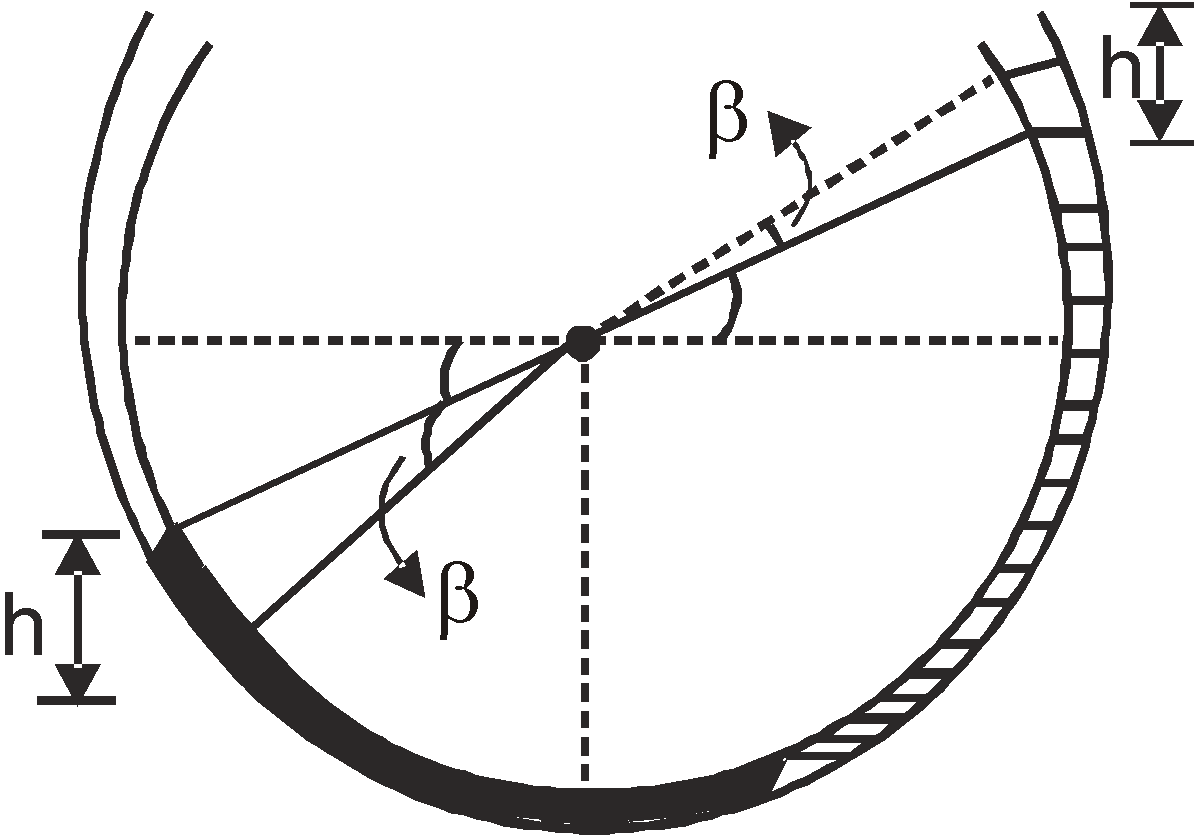
h = R sin (θ+β) – Rsinθ
τ = – (  P) (R)
or τ = – 2.5 ρ gh AR
= – 2.5 ρ g AR [R sin (θ + β) – R sin θ]
= – 2.5 ρ g AR 2 [ sin θ cos β + sin β cos θ – sin θ]
Assuming cos β = 1 and sin β = β (given, β is small)
∴ τ = – (2.5 ρ A gR 2 cosθ) β
or Iα = – (2.5 ρ AgR 2 cosθ) β ...........(1)
Here, I = (m 1 + m 2 ) R 2
= [ (  .A ) g +
  . A (1.5 g)] R 2
= (1.25 π R 3 g) A
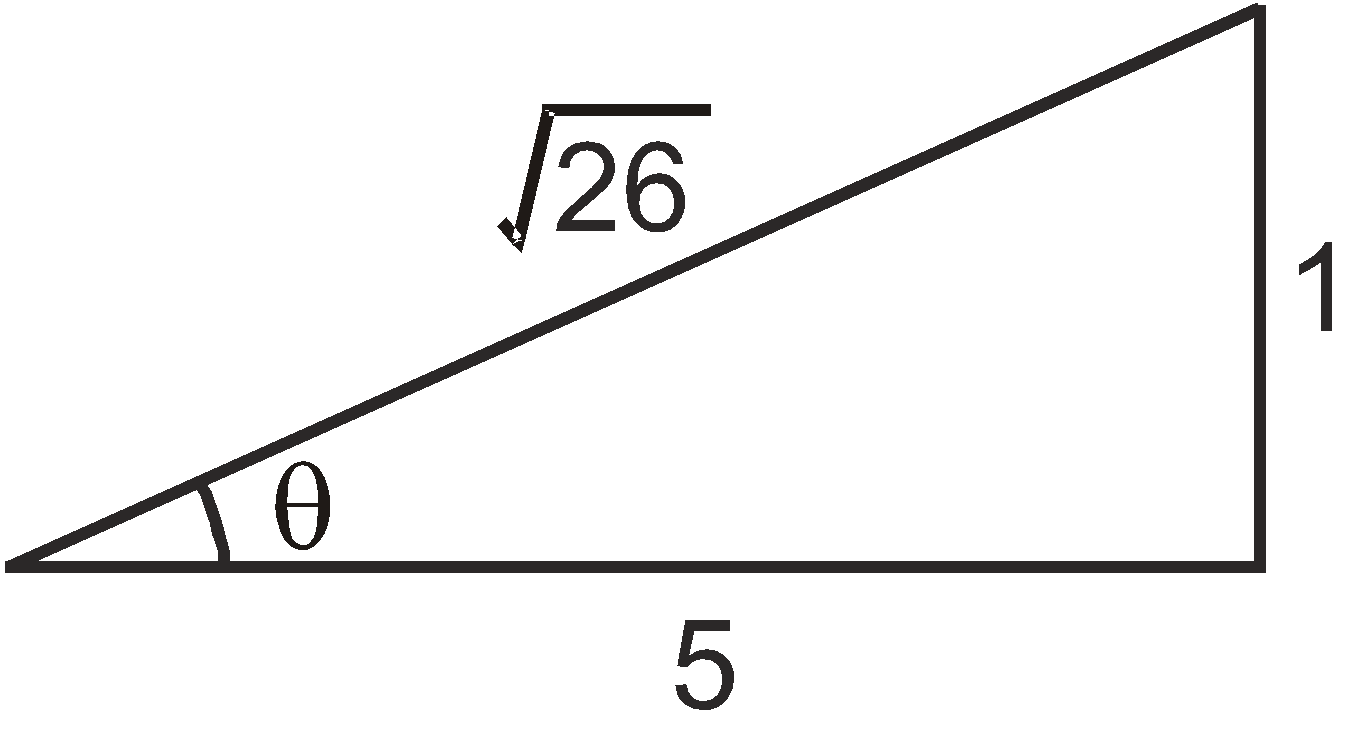
and cosθ =  = 0.98
Substituting in equation (1), we have
α = – 
⇒ angular acceleration ∝ –angular displacement
As angular acceleration is proportional to – β , motion is simple harmonic in nature.
T = 2 π  = 2 π
= 2 π 
Prepare Smarter with CGP Edu
Get practice questions, solutions, and test series in one place.
Write a Review
Share your experience with this question and solution.
Commentary
Send your comment, doubt, correction, or feedback to admin.
Similar Questions
Explore conceptually related problems